
Contents
Bottom-line answer
Most pre‑meds do not need a $2,000–$4,000 “mega course” to do well on the MCAT—but some students absolutely benefit from paying for structure, accountability, and expert feedback. The MCAT is heavily “practice-driven,” and the AAMC (the test maker) explicitly emphasizes that learning through practice is key and sells official practice materials written by the same developers who write the real exam.
If you’re deciding whether to enroll, here’s the shortest honest conclusion:
A paid course is usually worth it if you need external structure to actually do the work, you’re retesting, you’re far from your target, or you want coaching + accountability (not just content review). If you’re self-directed and disciplined, you can often build an excellent plan around AAMC official resources + one high-quality practice system and keep costs dramatically lower.
What matters most for MCAT prep
The MCAT is a standardized, computer-based exam with four multiple-choice sections (and includes some unscored “field-test” questions). Your total score ranges 472–528, with a midpoint of 500.
Why does this matter for the “course vs. no course” decision?
Because MCAT improvement is less about “having more materials” and more about doing the right behaviors repeatedly: timed practice, careful review, and iterating on weak areas. The AAMC’s own guidance stresses using practice exams under test-like conditions and reviewing missed/flagged questions.
A quick reality check on scores and percentiles
AAMC percentile data (effective May 1, 2025 – April 30, 2026) shows that a 515 is about the 91st percentile, and the mean total score is 500.5.
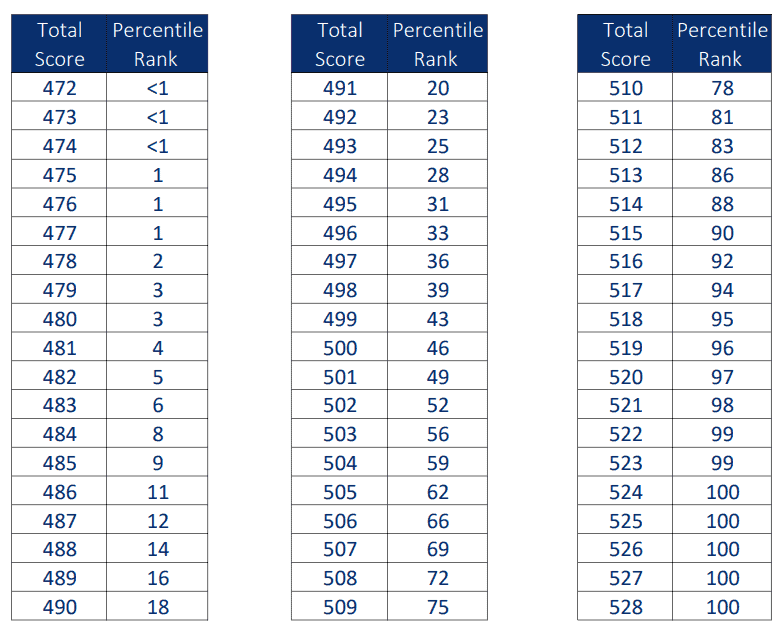
This matters because many premium courses market “515+ guarantees.” Those guarantees often come with strict eligibility rules and required work completion—so you’re not just paying for content, you’re paying for a high-accountability system (and a contractual promise under certain conditions).
The most “universal” resource choice: official AAMC practice
AAMC survey data (Post‑MCAT Questionnaire) shows how common official practice is: in 2021, 89.2% of respondents reported using Official MCAT Practice Exams, and these were rated “very useful” by a large majority of users (e.g., 73.2% “very useful” for Official Practice Exams in 2021).
Translation: regardless of which company you pick (or if you self-study), AAMC practice is the backbone of most successful prep plans.
The baseline cost context most students forget
For the 2026 testing year, AAMC lists the MCAT standard registration fee as $355, and the Fee Assistance Program (FAP) registration fee as $145.
That means a $2,500–$3,500 course can cost ~7–10× the exam registration fee—so it deserves a real return-on-investment conversation, not just “everyone else is doing it.”
What paid prep courses and tutoring actually buy you
When students feel disappointed after paying thousands, it’s usually because they unknowingly bought the wrong “product category.”
Here’s what you’re actually paying for (in plain English):
A structured plan you don’t have to invent
Good courses provide an integrated study calendar and tell you exactly what to do each day/week. For example, Blueprint markets a planner and structured modules across its product line, positioning it as a “pick your path” system rather than a pile of content.
If planning is your biggest weakness, this alone can be the difference between finishing prep and endlessly “getting ready to get ready.”
A content review system, in the format you’ll actually use
This is where learning styles matter more than brand names.
Magoosh, for instance, emphasizes 380+ content videos, built-in schedules, and 740+ practice questions (with detailed explanations), and is priced far below most live courses.
Princeton Review emphasizes large libraries of lessons and practice (e.g., 500+ hours of video lessons and thousands of practice questions in its Self‑Paced offering).
Accountability and live support
Live classes and coaching can convert “good intentions” into consistent execution.
Kaplan describes selecting instructors who scored 520+ and offers structured options including live online and in-person classes.
Blueprint’s higher tiers emphasize live instruction, coaches, and frequent live review sessions.
A practice ecosystem with analytics
Most big providers bundle question banks, full-length exams, and performance dashboards. Blueprint, for example, advertises 5,000+ Qbank questions, learning modules, practice exams, and analytics across its options.
The Princeton Review similarly emphasizes extensive practice test volume and Q&A support.
“Score guarantees” (with fine print)
Score guarantees are real—but conditional.
Blueprint states (in plain language) that if you start with a diagnostic ≥500, they guarantee 515+, and if you start <500, they guarantee at least a 15‑point increase (with eligibility requirements).
The Princeton Review guarantee terms show a similar structure for certain programs (e.g., under 500 → at least 15 points; 500+ → 515+) and specify required attendance, homework, and multiple full-length practice tests.
Kaplan also markets a guarantee tied to baseline score and specific eligible programs (e.g., 515+ or +15, depending on baseline) with conditions.
A guarantee can be valuable if it pushes you to do the work—but don’t treat it like an automatic score upgrade.
Tutoring is a different product than a course
Tutoring is best viewed as “diagnose + fix bottlenecks,” not “teach everything.”
MedSchoolCoach publishes package pricing from $2,200 (10 hours) up to $9,000 (60 hours) and bundles additional resources (session recordings and other prep tools).
This can be worth it when you have a very specific problem (timing, CARS approach, passage reasoning, test anxiety, reviewing mistakes poorly) and need targeted intervention.
Side-by-side look at major U.S. options
Prices and promos change constantly, but the “shape” of the market is stable. Below are common, popular options U.S. pre‑meds compare.
Comparison snapshot
| Provider/type | Typical format | Advertised entry price (as shown on provider pages) | Best at | Notable guarantee language |
|---|---|---|---|---|
| AAMC Official Prep | Official practice exams + question sets | $323.70 for the Online‑Only Bundle (1-year subscription) | Most representative practice (written by test developers) | Not a “score guarantee”—it’s the official material |
| Blueprint | Self-paced, live online, premium 515+ tiers | Self‑Paced from $1,099; Live Online from $1,899; 515+ from $2,399 | Modern platform, structured planner, analytics, lots of practice | 515+ / +15 structure depending on baseline |
| The Princeton Review | Self-paced + higher live/immersion tiers | Self‑Paced $1,599 (6 months) or $1,999 (12 months) | Heavy curriculum + lots of practice + live topic sessions | 515+ / +15 logic for certain programs, with strict completion requirements |
| Kaplan | On-demand, live online, in-person, premium tiers | Live Online shown at $2,399 (6 months) on Kaplan’s course listing snippet | Big-company structure, instructor-led options, in-person availability | 515+ or +15 depending on baseline for eligible programs; conditions apply |
| Magoosh | Low-cost self-paced video-based course | $379 (1 month) or $399 (12 months) | Affordable content review + schedules | +10 points guarantee (money back) |
| Altius | Mentoring + small-group emphasis | Pricing often varies by package; Altius markets outcomes rather than clear checkout prices on its homepage | Coaching/mentoring style over lecture style | Markets high outcomes (e.g., average score claims) |
| Tutoring platforms / boutique tutoring | 1:1 sessions (online or in person) | Often hundreds/hour or package-based; examples include MedSchoolCoach packages $2,200–$9,000 | Fixing personal bottlenecks fast | Guarantees vary or are “we’ll keep working” style |
What you “get” is often similar—execution is the differentiator
Most major courses now include some version of: videos, question banks, full-length exams, analytics, and a schedule. The differentiators are:
The quality of explanations and review tools; whether you will truly show up for live sessions; and whether the system matches how you learn and how you procrastinate. (A course you don’t use is just an expensive dashboard.)
When it’s worth paying and when it’s not
A paid course is usually worth it when you need forced consistency
Consider paying for a course if:
You have a history of stopping and restarting self-study. Live schedules and check-ins can be the scaffolding you need (Blueprint and Kaplan both explicitly sell the “show up and follow the plan” value).
You’re aiming for a large jump and don’t know why you’re stuck. This is where coaching and structured review processes can matter more than another book set.
You’re retaking the exam. Retakers often need diagnosis and strategy changes, not another round of reading. (This is where tutoring or a coach-heavy course tends to outperform “more content.”)
You are overwhelmed by planning. AAMC itself provides study-plan guidance—but some students still benefit from outsourcing the whole framework to a course.
It’s probably not worth it when you’re already self-directed
A big course may be unnecessary if:
You reliably follow schedules without external pressure. If you can take AAMC Practice Exam 1 under test-like conditions, review your misses, and iteratively target weaknesses (as AAMC recommends), you can likely self-prep effectively.
You learn best by doing and reviewing, not by watching lectures. In that case, spend more on high-quality practice + review time and less on live instruction.
Your budget is tight (or debt-averse). Financial strain adds stress, and stress can quietly sabotage prep. If cost is a barrier, you should look seriously at FAP and low-cost options before committing.
The strongest “middle ground” for many students: targeted help + official practice
A very common high‑ROI strategy is:
Use AAMC official practice as the backbone → add one structured system for daily practice/content review → then buy a small amount of tutoring specifically for your worst section or biggest bottleneck.
That approach often costs far less than a premium live course and can be more personalized.
How to build the smartest plan around your budget
Below are three practical “best combo” paths. They’re designed around what AAMC says matters (practice + review) and what the market actually offers.
Low-budget plan that still hits the core needs
Start with the AAMC MCAT Official Prep Online‑Only Bundle (1 year), listed as $323.70, which includes 2,710 questions and multiple official products.
Pair it with free AAMC planning resources (and the Khan Academy MCAT Collection, which AAMC describes as including sample content across all four sections and was created with AAMC support/funding).
This plan is especially strong if you’re disciplined and don’t need live accountability.
Mid-budget plan for students who want structure but not “elite-tier” pricing
Pick one affordable structured system (example: Magoosh at $399 for 12 months), then anchor your later prep around AAMC practice exams and question sets.
Magoosh also states it offers free prep for students who qualify for the AAMC Fee Assistance Program.
This path is often ideal for students juggling classes/work who want a guided content review system but don’t need (or can’t afford) a live mega-course.
Premium plan for students who need live accountability and want a formal guarantee framework
If your biggest issue is “I don’t do the work unless someone is waiting for me,” consider live/coach-heavy programs:
Blueprint’s product comparison page lists Self‑Paced from $1,099, Live Online from $1,899, and 515+ from $2,399 (with score guarantees).
The Princeton Review lists its Self‑Paced package at $1,599 (6‑month) or $1,999 (12‑month) and includes extensive practice resources.
Kaplan offers multiple formats (including in-person classes) and markets guarantees tied to baseline scores for certain products, with conditions.
Important: if you pay for a guarantee-based program, read the guarantee rules first—because the guarantee often requires a very specific set of completed tasks and practice tests.
Biggest cost-saving move most students miss: Fee Assistance Program
If money is a serious factor, check the AAMC Fee Assistance Program early.
AAMC’s FAP benefits page explicitly lists reduced MCAT registration fees from $355 to $145 and includes the MCAT Official Prep products benefit (Online‑Only Bundle).
If you qualify, the ROI math changes dramatically: you can get the most “representative” prep materials (AAMC official) at a fraction of the typical cost, and then only pay for targeted extras if needed.
Before you buy anything, run this quick decision test
Take an official-style diagnostic, then ask:
Do I need a schedule to make me study? (If yes → live course/coach-heavy may be worth it.)
Am I mainly missing content, or am I missing passage reasoning/timing? (Timing/reasoning problems often respond better to coaching + heavy practice review than to more videos.)
Will this purchase reduce stress—or create it? (If paying will make you anxious, that cost matters.)
A final, honest takeaway
Paying for an MCAT course is not “smart” or “dumb.” It’s smart only when it changes your behavior—when it gets you to practice more, review better, and stay consistent longer.
If you can already do that independently, you’re often better off building your prep around AAMC official materials (the resources most test-takers use and rate as highly useful) and adding only the paid pieces that directly fix your bottlenecks.

 English
  Français du Canada
  Español de México
  हिन्दी
  עִבְרִית
  简体中文
简体中文  繁體中文
繁體中文  日本語
日本語  한국어
한국어  Português do Brasil
  Deutsch
  Tiếng Việt
  বাংলা
বাংলা  العربية
  Русский
  Türkçe